
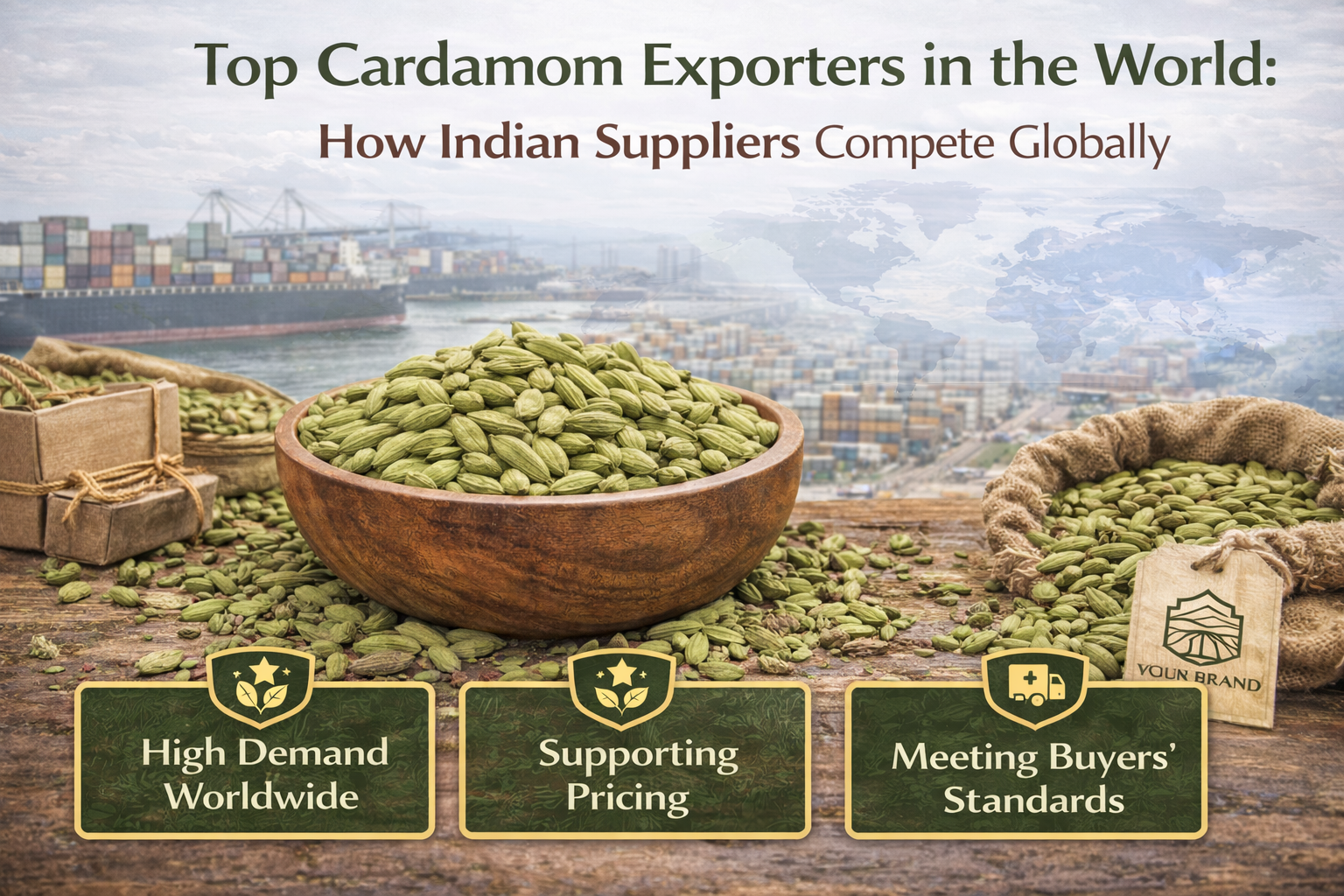
The global cardamom trade is concentrated among a limited number of producing nations, yet competition among exporters is defined less by volume and more by quality consistency, certification compliance, and supply reliability. For international importers, selecting among the world’s top cardamom exporters requires a careful evaluation of origin, processing standards, and export professionalism.
The primary cardamom-exporting countries include:
- India
- Guatemala
- Sri Lanka
- Tanzania
While Guatemala leads in overall production volume, India continues to command premium positioning in international markets. This distinction is not driven by quantity alone, but by product differentiation and export discipline.
Volume vs. Value: Understanding Global Competition
Guatemala’s dominance is largely based on large-scale production. However, high-volume output does not automatically equate to premium market positioning. In contrast, Indian cardamom is widely recognized for:
- Stronger aroma intensity
- Higher volatile oil concentration
- Superior density
- Vibrant natural green color
- High-altitude cultivation benefits
These characteristics position Indian-origin cardamom strongly in premium retail, gourmet spice brands, and luxury coffee markets, particularly across the Middle East, Europe, and North America.
Global buyers targeting high-end consumers typically prioritize aroma performance and visual appeal over bulk pricing advantages.
What Defines a Top Cardamom Exporter Globally?
When evaluating leading exporters worldwide, international buyers typically assess the following critical factors:
1. Grade Uniformity
Uniform capsule size directly influences retail packaging aesthetics and processing efficiency. Reliable exporters maintain consistent grading categories such as 6mm, 7mm, and 8mm+ bold grades. Mechanical grading combined with manual inspection reduces variability between shipments.
Inconsistent grading leads to buyer dissatisfaction and pricing disputes — something serious exporters actively prevent.
2. Oil Content Stability
Volatile oil concentration determines aroma strength and flavor performance. Oil-rich capsules perform better in:
- Coffee blends
- Tea infusions
- Spice powders
- Confectionery applications
Higher oil retention also improves shelf life stability. Buyers serving premium segments often request laboratory reports confirming oil percentage levels.
Indian high-altitude cultivation conditions naturally enhance oil development, giving exporters a competitive advantage in the premium category.
3. Regulatory Compliance & Documentation
Top exporters worldwide must demonstrate strong documentation capabilities. This includes:
- Phytosanitary certification
- Certificate of Origin
- Commercial invoice accuracy
- Laboratory testing compliance
- FSSAI and national export registration
Markets such as the European Union and GCC require strict documentation alignment. Exporters lacking structured compliance systems face clearance delays and reputational risks.
India’s established spice export ecosystem strengthens its competitive position in regulated markets.
4. Packaging Integrity & Freight Protection
Cardamom is sensitive to moisture, oxidation, and temperature changes during transit. Professional exporters use:
- Moisture-resistant liners
- Vacuum-sealed packaging
- Nitrogen flushing (when required)
- Optimized carton stacking for container loading
Proper packaging ensures aroma retention during long sea freight routes — especially critical for shipments to Europe and North America.
The Indian Competitive Advantage
Indian exporters frequently operate with integrated supply systems that combine:
- Direct plantation sourcing
- Controlled curing infrastructure
- In-house grading
- Quality testing
- Structured export documentation
This vertical integration allows tighter quality control compared to fragmented supply chains.
Additionally, India benefits from regulatory support structures through official export bodies and inspection authorities, strengthening global buyer confidence.
Companies such as Western Roots Indian Spices represent this integrated export model, combining plantation-level sourcing with structured grading, curing, and documentation management tailored for international markets.
Market Segmentation: Premium vs. Commodity
Global cardamom trade is divided broadly into:
- Commodity-grade volume supply
- Premium-grade performance supply
Guatemala often dominates volume-driven segments. Indian exporters, however, compete strongly in the premium tier, where aroma intensity, capsule boldness, and grading consistency command higher prices.
Buyers serving luxury coffee markets, gourmet spice brands, and high-end retail chains typically prefer Indian-origin cardamom due to performance reliability.
Strategic Procurement Decisions for Importers
When choosing among the world’s top cardamom exporters, importers must align procurement strategy with market positioning:
If the objective is:
- Low-cost mass distribution → Volume producers may suffice.
- Premium retail performance → High-oil, high-altitude Indian cardamom offers measurable advantages.
Evaluating exporters based on certification readiness, curing infrastructure, grading discipline, and documentation efficiency reduces long-term procurement risk.
Conclusion
The global cardamom trade remains competitive, but premium positioning depends on more than production scale. Quality consistency, oil concentration stability, regulatory compliance, and packaging integrity define true export leadership.
While Guatemala may dominate in total output, Indian exporters maintain a strong global reputation in the premium segment — particularly among buyers who prioritize aroma intensity, grade uniformity, and reliable documentation.
For international importers targeting high-performance markets, Indian-origin cardamom continues to stand as a preferred choice in global trade.