
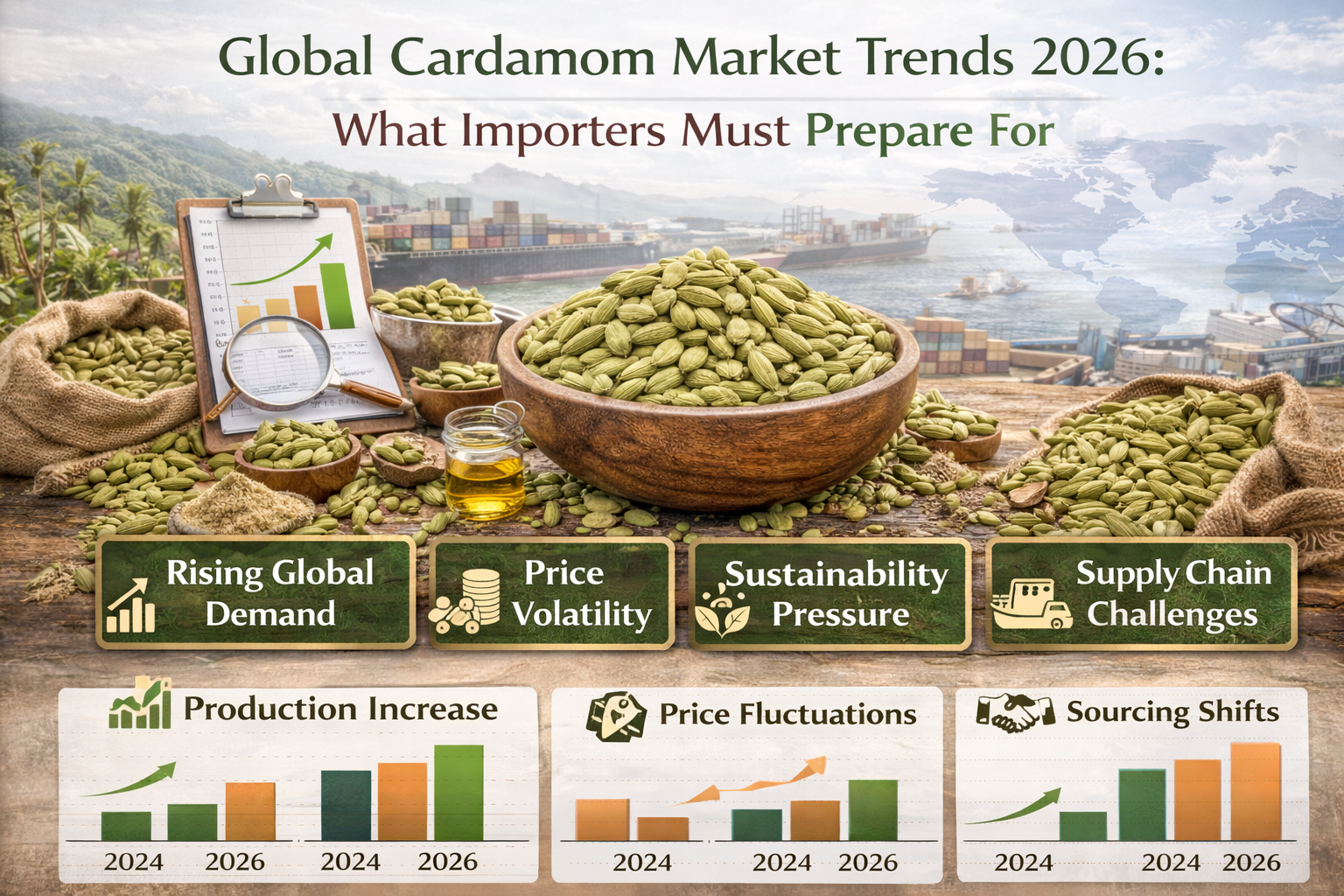
The global cardamom market is entering a more structured and quality-driven phase. As we move toward 2026, international spice trade is being shaped by shifting consumer preferences, regulatory developments, climate variables, and premium market expansion.
For importers, wholesalers, and private-label brands, anticipating these changes is essential to maintaining profitability and supply stability. Cardamom — often referred to as the “Queen of Spices” — continues to hold strong demand globally, but procurement strategies must evolve to remain competitive.
Below are the major trends expected to influence the global cardamom market in 2026.
1. Rising Demand in Middle Eastern Markets
The GCC region remains one of the largest consumers of green cardamom. Its integral role in Arabic coffee (Gahwa) culture ensures consistent baseline demand.
By 2026, Middle Eastern markets are expected to:
- Maintain steady consumption levels
- Continue favoring bold-size capsules (7mm–8mm+)
- Prioritize aroma intensity
- Support premium pricing tiers
For exporters supplying GCC buyers, maintaining oil-rich and visually consistent grades will remain critical. Importers serving this region should anticipate stable, long-term demand rather than volatile seasonal spikes.
2. Health & Wellness Integration
Cardamom’s reputation for digestive and antioxidant benefits is expanding its application beyond culinary use. By 2026, increased incorporation into:
- Herbal teas
- Nutraceutical capsules
- Functional beverages
- Ayurvedic formulations
- Clean-label wellness products
is expected to drive diversified demand.
Health-focused markets often prioritize residue compliance, traceability, and laboratory certification. Importers targeting this segment must strengthen quality verification systems and supplier transparency.
3. Quality Over Quantity Purchasing
The global spice industry is gradually shifting from price-driven procurement toward performance-driven purchasing.
Importers are increasingly prioritizing:
- Volatile oil percentage
- Moisture stability
- Capsule density
- Traceability systems
- Certification compliance
Rather than selecting suppliers based solely on lowest cost, buyers are evaluating long-term consistency and regulatory reliability.
Premium positioning enables better resale margins, making quality-centric sourcing financially strategic.
4. Climate Sensitivity & Supply Volatility
Cardamom cultivation is highly sensitive to climatic variables such as:
- Rainfall patterns
- Temperature fluctuations
- Soil moisture balance
- Disease outbreaks linked to humidity shifts
Climate variability in producing regions may influence annual yield volumes. Reduced harvest output can lead to pricing firmness and short-term volatility.
Importers preparing for 2026 should:
- Diversify sourcing networks
- Monitor harvest forecasts
- Secure forward contracts during favorable crop cycles
- Maintain safety stock buffers
Strategic planning reduces exposure to sudden price escalations.
5. Increased Traceability & Regulatory Demands
European and North American markets are expected to further tighten compliance frameworks by 2026. Buyers may face stricter requirements related to:
- Pesticide residue limits
- Batch traceability documentation
- Origin verification
- Phytosanitary certification
- Sustainability reporting
Traceability is no longer optional — it is becoming a mandatory procurement requirement.
Importers partnering with structured exporters reduce regulatory risk and clearance delays.
6. Expansion of the Premium Segment
Retail-ready bold-size cardamom continues to grow faster than commercial-grade supply. Consumer preference for:
- Larger capsule sizes
- Stronger aroma
- Clean-label presentation
- Transparent sourcing
is expanding premium market share globally.
Supermarkets, gourmet spice retailers, and private-label brands are allocating more shelf space to high-grade products.
This premium shift supports price stability even when overall market volumes fluctuate.
Pricing Outlook for 2026
Due to:
- Limited cultivation zones
- Rising labor costs
- Climate sensitivity
- Increasing compliance investment
cardamom pricing is expected to remain moderately firm.
While short-term fluctuations may occur based on harvest output, structural factors support a stable-to-strong pricing trend in the premium segment.
Importers who plan strategically rather than reactively will maintain margin stability.
Strategic Recommendations for Importers
To prepare for 2026 market conditions, importers should:
- Diversify sourcing partnerships to reduce climate exposure
- Lock supply contracts during peak harvest availability
- Request lab-tested oil content and moisture reports
- Monitor regulatory updates in destination markets
- Invest in long-term supplier relationships rather than spot buying
Building resilient supply chains is becoming more important than short-term cost advantages.
The Role of Professional Exporters
As global spice trade becomes increasingly structured, exporters combining agricultural expertise with compliance infrastructure will dominate premium supply channels.
Integrated sourcing, grading precision, curing technology, and documentation accuracy will define competitive advantage.
Companies such as Western Roots Indian Spices operate within this structured export model — aligning plantation-level sourcing with modern quality control and regulatory readiness tailored for international markets.
Conclusion
Cardamom’s position as the “Queen of Spices” remains strong heading into 2026. However, profitability for importers will depend on strategic sourcing decisions rather than opportunistic purchasing.
Rising demand in GCC markets, wellness-driven diversification, traceability requirements, and climate-sensitive supply cycles will shape the global trade landscape.
Importers who prioritize quality consistency, regulatory alignment, and long-term partnerships will be best positioned to thrive in the evolving cardamom market of 2026 and beyond.