
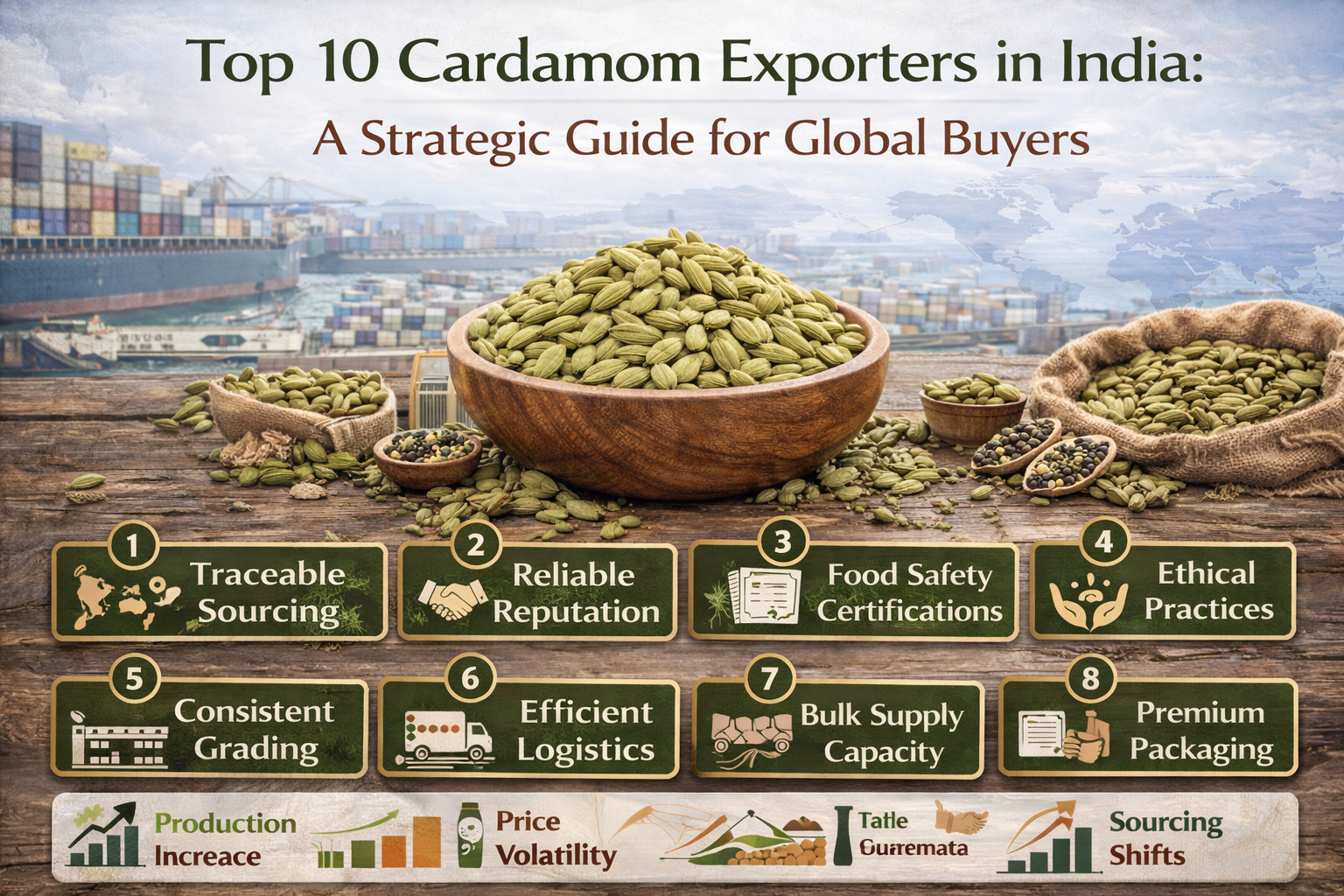
India continues to hold a distinguished position in the global spice trade, particularly in the premium green cardamom segment. For international importers searching for the top 10 cardamom exporters in India, the goal is not simply to identify companies with high shipment volumes — it is to select structured, compliant, and scalable partners capable of delivering consistent export-grade performance.
In today’s competitive international market, supplier selection directly influences product quality, regulatory clearance, brand reputation, and long-term profitability. A strategic evaluation framework helps global buyers identify exporters who combine agricultural expertise with disciplined export systems.
Why India Maintains a Premium Position
Indian cardamom — especially from high-altitude plantation zones — is recognized globally for:
- Superior volatile oil concentration
- Strong aroma intensity
- Vibrant natural green color
- Dense capsule structure
- Stable shelf-life performance
These characteristics make Indian-origin cardamom particularly attractive for:
- Premium retail packaging
- Private-label spice brands
- Gourmet culinary markets
- Luxury coffee and tea applications
However, exporter capability varies significantly within the industry. Identifying top-performing exporters requires more than reviewing marketing claims.
Key Criteria for Evaluating Top Cardamom Exporters in India
Global buyers should assess exporters based on measurable operational strengths.
1. Direct Plantation Sourcing
Exporters with close relationships to cultivation zones maintain stronger control over:
- Harvest timing
- Crop selection
- Initial quality screening
- Traceability documentation
Direct sourcing reduces dependency on fragmented market intermediaries and improves batch consistency.
2. Advanced Grading Infrastructure
Professional exporters invest in structured grading systems that deliver:
- Uniform 6mm grade
- Consistent 7mm premium grade
- Bold 8mm+ grade classification
Mechanical grading combined with manual inspection ensures minimal size variation and visual consistency — critical for retail and private-label applications.
Uniform grading reduces disputes and strengthens buyer confidence across repeated shipments.
3. Controlled Drying & Curing Technology
Curing directly influences aroma retention and color stability. Leading exporters use:
- Temperature-regulated electric drying chambers
- Controlled airflow systems
- Moisture monitoring protocols
Proper curing protects natural green color without artificial enhancement. Poorly cured cardamom loses aroma strength and may discolor during shipping.
4. Certification & Export Compliance Readiness
Top exporters maintain documented regulatory compliance, including:
- FSSAI registration
- Spices Board certification
- APEDA documentation
- Phytosanitary clearance
- Accurate HS code classification
Structured compliance reduces customs delays and regulatory risk in highly controlled markets such as the EU, GCC, and North America.
5. Laboratory Testing & Quality Verification
Serious exporters support shipments with:
- Moisture percentage analysis
- Volatile oil content testing
- Purity verification
- Residue compliance reports
Laboratory documentation protects buyers from rejection risks and strengthens long-term supply agreements.
6. International Market Experience
Exporters serving diversified global markets demonstrate operational maturity. Presence in regions such as:
- GCC countries
- European Union
- North America
- Southeast Asia
indicates structured freight coordination, documentation accuracy, and regulatory awareness.
Experience in multiple regulatory environments enhances reliability.
7. Scalable Supply Capacity
Long-term B2B relationships require scalability. Top exporters maintain:
- Stable sourcing networks
- Sufficient processing capacity
- Inventory management systems
- Consistent tonnage fulfillment
Scalability ensures importers can expand volumes without compromising quality standards.
Differentiating Structured Exporters from Traders
India’s cardamom sector includes both organized exporters and opportunistic traders. The distinction lies in infrastructure depth.
Structured exporters integrate:
- Plantation-level sourcing
- In-house grading systems
- Controlled curing technology
- Documentation management
- Freight coordination
This vertical integration enhances control and reduces variability.
Companies such as Western Roots Indian Spices operate within this integrated export framework, combining agricultural expertise with structured grading, curing, and compliance systems tailored for international buyers.
Strategic Supplier Selection for B2B Buyers
Rather than compiling a literal list of ten companies, global buyers should adopt a strategic screening approach based on:
- Operational transparency
- Quality consistency
- Certification readiness
- Documentation accuracy
- Post-shipment support
Selecting among India’s top-performing exporters ensures:
- Consistent aroma strength
- Reliable grading uniformity
- Accurate export documentation
- Predictable delivery timelines
These factors collectively protect importer margins and brand reputation.
Conclusion
India’s cardamom export industry remains highly competitive and quality-driven. While numerous exporters operate within the market, only structured, compliance-focused, and scalable suppliers consistently meet premium international standards.
For B2B buyers seeking long-term partnerships rather than transactional sourcing, evaluating exporters through measurable operational criteria ensures supply reliability and brand security.
In premium spice distribution, performance consistency outweighs short-term price advantages. Selecting among India’s top-performing cardamom exporters strengthens both supply chain resilience and long-term profitability.