
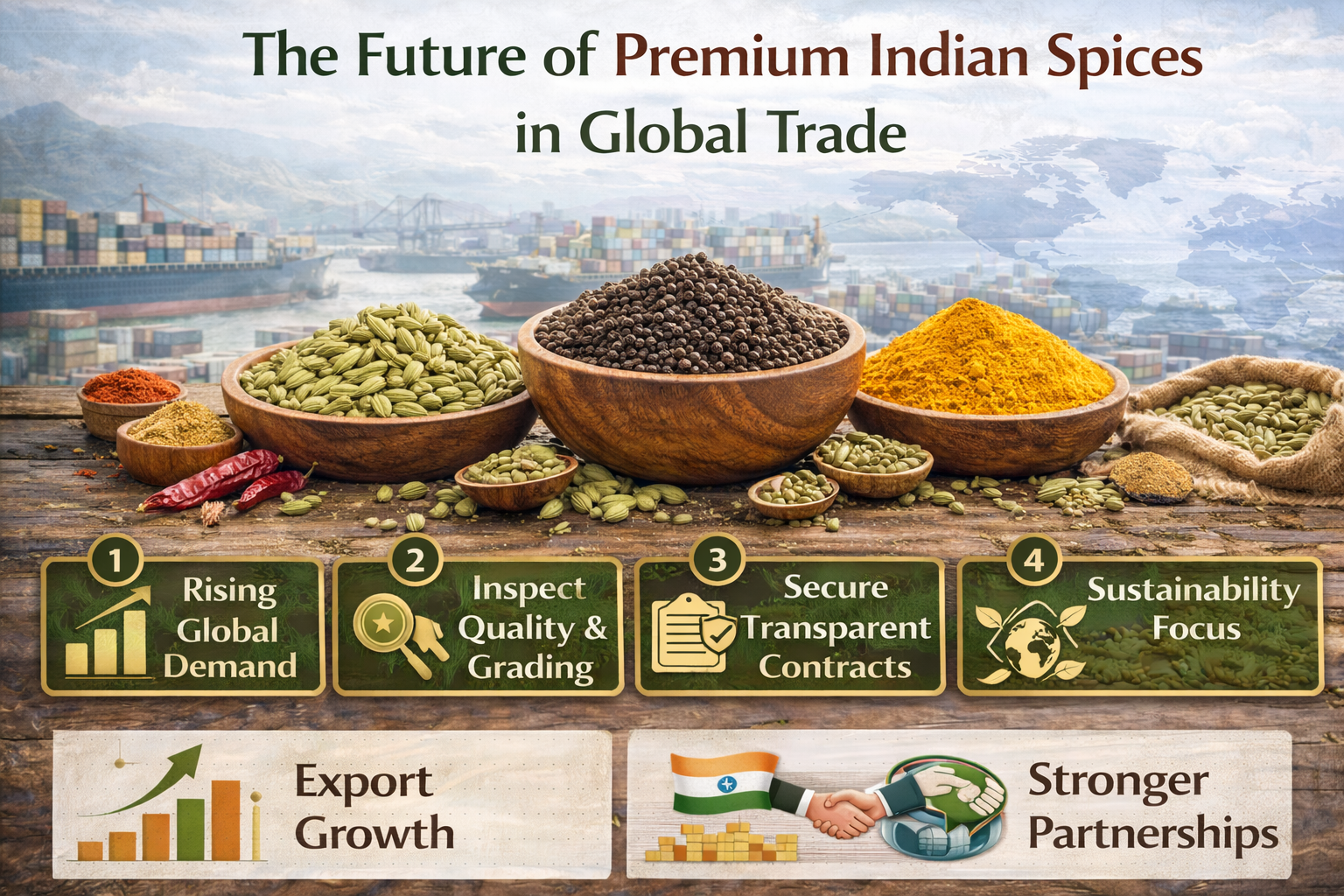
The global spice industry is entering a new era — one defined not by volume alone, but by value, traceability, and premium positioning. As international consumers become more informed and quality-conscious, demand for authentic, responsibly sourced spices is accelerating. Within this evolving landscape, Indian-origin spices hold a uniquely strong competitive advantage.
India’s ecological diversity, cultivation heritage, and established export infrastructure position it as a long-term leader in the premium spice segment. Cardamom remains at the forefront of this transformation, but black pepper, and garlic are also gaining strategic importance in international trade.
For importers, distributors, and private-label brands, understanding these emerging dynamics is critical for long-term profitability.
Premiumization of the Global Spice Market
Spices are no longer viewed merely as flavoring agents. They are increasingly positioned as:
- Functional ingredients
- Wellness-supportive components
- Clean-label products
- Cultural authenticity markers
- High-margin retail categories
This shift has elevated the importance of origin, processing integrity, and supplier credibility.
Premium Indian spices — particularly high-altitude cardamom — benefit from strong heritage associations and consistent performance in global culinary applications.
1. Traceability & Transparency as Core Trade Drivers
Modern buyers demand visibility across the supply chain. From farm-level sourcing to final shipment, transparency is becoming a prerequisite for trade partnerships.
Traceability enhances:
- Regulatory compliance
- Recall readiness
- Brand credibility
- Consumer trust
Structured exporters implement documentation systems that track:
- Plantation origin
- Harvest cycles
- Batch grading
- Laboratory testing
- Export documentation
Importers who prioritize traceable sourcing protect their market reputation and strengthen retail confidence.
2. Clean Label Movement
International consumers increasingly prefer spices free from:
- Artificial coloring
- Chemical additives
- Preservatives
- Synthetic enhancement
Clean-label positioning is particularly influential in European and North American markets.
Premium Indian cardamom, black pepper, and garlic — when processed under controlled and natural systems — align well with this global clean-label movement.
Authenticity is becoming a competitive differentiator.
3. Packaging Innovation & Shelf-Life Technology
Packaging is no longer simply protective — it is strategic.
Retail-ready formats, nitrogen-flushed packaging, moisture-resistant liners, and visually appealing pouches are redefining spice presentation in supermarkets and specialty stores.
For export markets involving long sea freight routes, packaging innovation plays a critical role in preserving:
- Aroma intensity
- Oil concentration
- Natural color
- Structural integrity
Premium packaging enhances both product performance and brand value.
4. Sustainability Expectations & Responsible Sourcing
Environmental responsibility has moved from optional to essential in global trade discussions.
Buyers increasingly evaluate suppliers based on:
- Sustainable farming practices
- Soil conservation methods
- Energy-efficient curing systems
- Ethical labor partnerships
Cardamom cultivation in India’s hill regions often follows shade-grown agroforestry systems that support biodiversity and ecological balance.
Sustainability strengthens long-term supply resilience while aligning with global consumer values.
5. Expansion of Private Label Brands
Private labeling is reshaping global spice distribution. Retailers and regional distributors increasingly collaborate with origin exporters to develop branded spice lines.
Private-label growth is driven by:
- Higher margin potential
- Direct brand control
- Consumer loyalty development
- Flexible inventory management
Premium Indian spices offer strong brand-building potential due to their aroma strength, quality consistency, and cultural authenticity.
Structured exporters capable of managing packaging, labeling compliance, and documentation accuracy are well positioned in this expanding segment.
6. Emerging Market Expansion
While traditional markets such as the GCC and Europe remain strong, emerging regions are showing accelerated demand growth.
Southeast Asia and Eastern Europe are expanding imports of:
- Premium green cardamom
- High-density black pepper
- Processed
- Dehydrated garlic
Urbanization, culinary diversification, and increasing disposable income contribute to this growth.
Importers targeting these regions must prioritize consistent grading and documentation compliance to capture expanding demand.
Cardamom’s Continued Leadership
Cardamom remains the flagship of premium Indian spice exports. Its complex aroma profile, essential oil concentration, and visual appeal support strong positioning in:
- Gourmet retail
- Specialty coffee markets
- Luxury food production
- Premium tea blends
However, diversification into black pepper, and garlic strengthens export portfolios and enhances supply chain flexibility.
Together, these spices represent a value-driven ingredient category rather than commodity bulk supply.
The Role of Professional Exporters
The next phase of global spice trade will be led by exporters who combine:
- Traditional agricultural expertise
- Modern curing technology
- Advanced grading precision
- Documentation accuracy
- Regulatory readiness
- Sustainable sourcing frameworks
Companies such as Western Roots Indian Spices reflect this integrated export model — aligning plantation-level sourcing with structured processing, packaging innovation, and international compliance standards.
Professional execution will define competitive advantage in the premium segment.
Conclusion
The future of premium Indian spices in global trade is shaped by transparency, quality differentiation, sustainability, and brand-oriented distribution models.
Cardamom, black pepper, and garlic are increasingly positioned as high-value ingredients within international food supply chains — not merely bulk commodities.
For B2B buyers, long-term profitability will depend on selecting export partners who combine agricultural authenticity with disciplined export systems.
As global trade becomes more structured and quality-driven, premium Indian spices are positioned to lead the next chapter of international spice commerce.