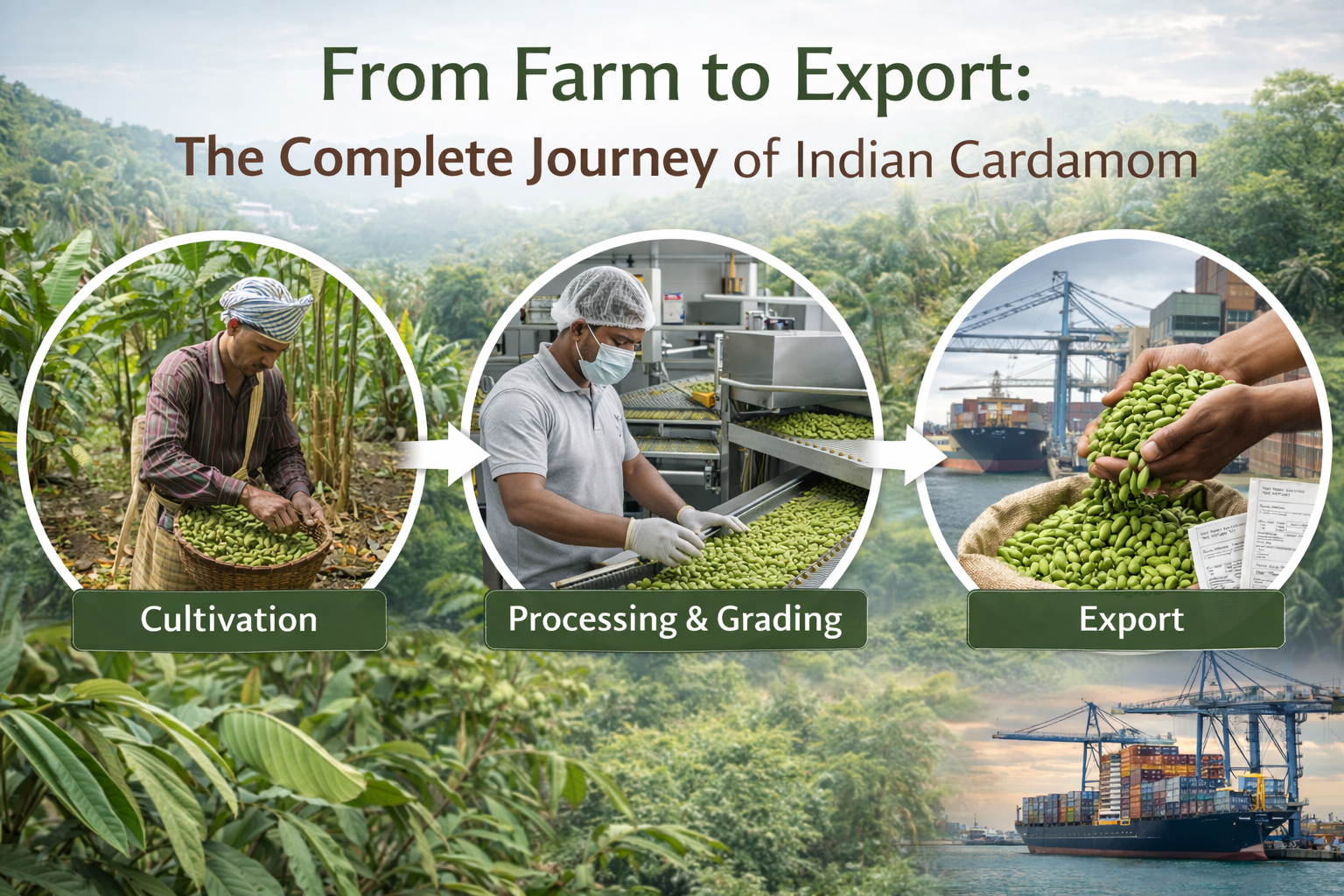
The journey of Indian cardamom from plantation to global market reflects precision, tradition, and export discipline. Understanding this structured process allows international buyers to better evaluate quality differentiation and long-term supply reliability.
The cycle begins in high-altitude plantations where shade-grown cultivation protects delicate pods from excessive sunlight. Grown between 800–1500 meters above sea level, cardamom benefits from cool mountain air, mist-covered mornings, and nutrient-rich loamy soil. Natural biodiversity enhances soil health and supports sustainable farming practices, contributing to superior aroma and oil concentration.
Harvesting is performed manually to prevent capsule damage. Skilled workers selectively pick mature pods at the optimal stage of ripeness. This timing is critical, as premature or delayed harvesting directly affects volatile oil levels and final export quality. Proper harvesting ensures that each capsule retains its natural strength, color, and density.
Post-harvest processing is one of the most crucial stages. Pods undergo curing in temperature-controlled drying chambers maintained between 45–50°C. Controlled curing preserves the vibrant green color while preventing fungal contamination and discoloration. This step significantly influences international acceptance standards, especially in European and GCC markets where visual quality is strictly evaluated.
Following curing, grading begins. Pods are mechanically and manually sorted into size categories such as 6mm, 7mm, and 8mm+. Uniform grading improves packaging efficiency and ensures alignment with buyer specifications. Larger capsule grades often command premium pricing due to stronger aroma retention and better visual appeal in retail packaging.
Quality control follows grading. Moisture levels are scientifically tested to prevent spoilage during long-distance shipping. Maintaining optimal moisture balance is essential for preventing mold growth and ensuring extended shelf life. Volatile oil content analysis confirms aroma strength, which directly affects performance in food manufacturing applications such as tea blends, spice mixes, and confectionery.
At Western Roots Indian Spices, this farm-to-export workflow is carefully monitored to ensure that every shipment meets export-grade standards, from plantation sourcing to final container loading.
Packaging is designed specifically for international logistics. Moisture-proof liners, multi-layer sacks, and vacuum sealing protect freshness during sea or air freight. Proper palletization and container optimization reduce transit risks, especially during extended shipping durations.
Export documentation completes the cycle. Professional exporters prepare commercial invoices, packing lists, phytosanitary certificates, certificates of origin, and coordinate shipping schedules with freight partners. Accurate documentation minimizes customs clearance delays and strengthens buyer confidence.
Each stage — cultivation, harvesting, curing, grading, testing, packaging, and documentation — contributes to product integrity. Companies like Western Roots Indian Spices integrate traditional agricultural expertise with modern export management systems to deliver consistent quality and reliable performance in global markets.
For international importers, understanding this structured journey highlights why sourcing from experienced Indian exporters ensures stable supply, documented compliance, and long-term trade partnerships.