
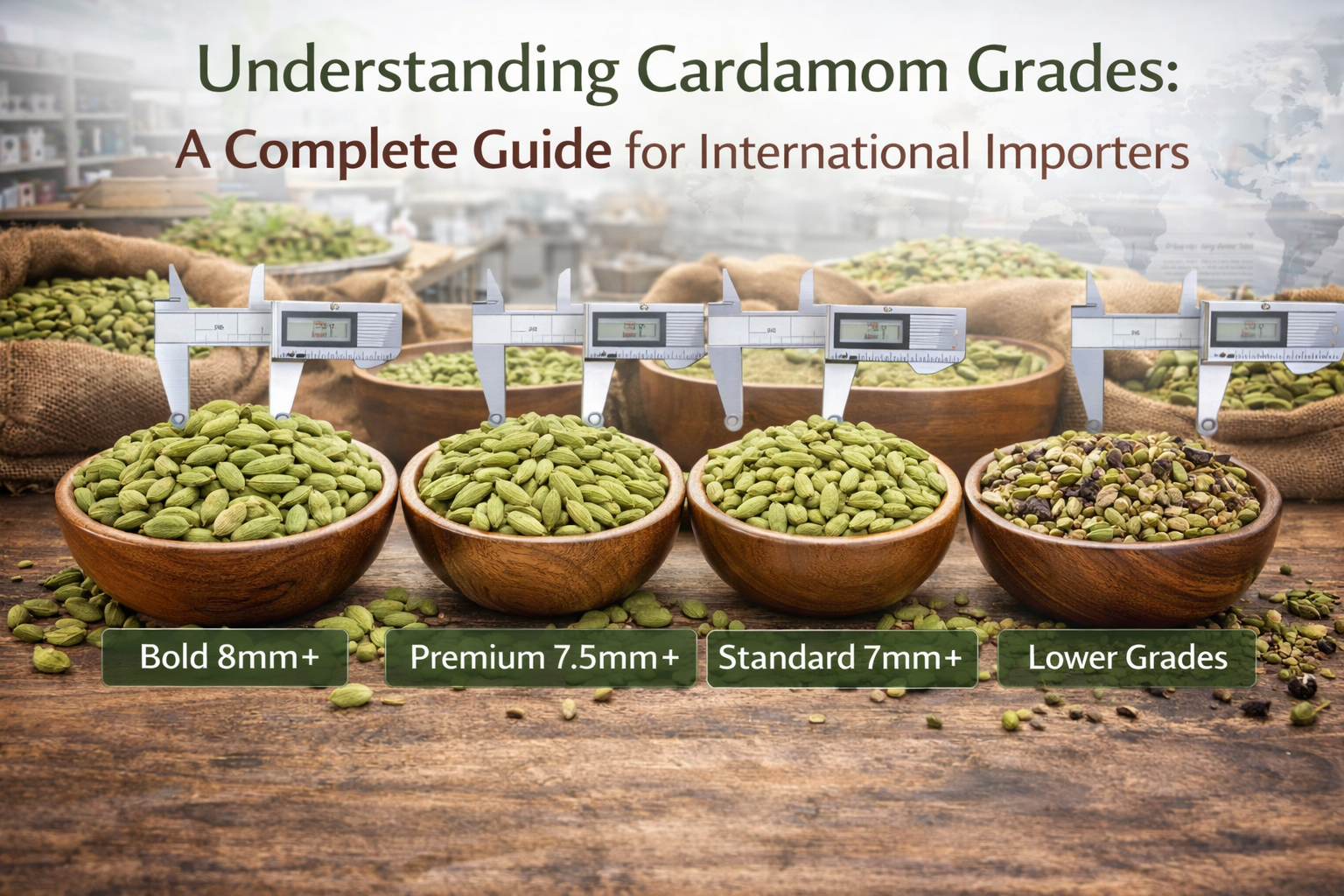
For international B2B buyers, understanding cardamom grades is essential for making informed purchasing decisions. Cardamom is not a uniform commodity — its pricing, performance, and end-use suitability depend heavily on size classification, oil concentration, density, and visual consistency.
Indian green cardamom is primarily graded by capsule diameter. Based on the official grading chart in your product profile (Grades & Specifications – Page 3), the standard export classifications include:
- 8.5 mm Bold (≥ 8.5 mm) – Premium export grade, deep green color, high oil content
- 8 mm (8.0 – 8.4 mm) – Bright green, aromatic, uniform capsules
- 7.5 mm (7.5 – 7.9 mm) – Balanced flavor, widely preferred by global B2B buyers
- 7 mm (7.0 – 7.4 mm) – Standard quality for bulk distribution
- 6.5 mm (6.5 – 6.9 mm) – Economical grade for blending and processing
- 5.5 – 6 mm (5.5 – 6.4 mm) – Suitable for powdering and oil extraction
Larger capsule sizes generally command higher prices due to superior visual appeal and stronger volatile oil retention. However, professional importers understand that size alone does not determine true quality.
Volatile Oil Content & Aroma Strength
Volatile oil percentage is one of the most critical quality parameters. High oil concentration enhances aroma intensity, flavor retention, and performance in:
- Tea blends
- Spice mixes
- Confectionery products
- Dairy and beverage formulations
For food manufacturers, oil content often outweighs capsule size in importance. Buyers focused on extraction or blending applications may prioritize density and oil percentage over bold appearance.
Moisture Control & Export Stability
Moisture content directly affects shipment stability. Excess moisture increases the risk of fungal contamination during sea freight, especially in humid transit routes. Conversely, over-dried capsules lose aroma and natural weight.
Professional exporters maintain controlled curing temperatures between 45–50°C (as shown in your Processing Excellence section – Page 2) to preserve color, oil content, and shelf life. Proper curing is the difference between premium export-grade cardamom and lower commercial quality.
Grading Precision & Uniformity
Uniform grading ensures batch consistency — a critical requirement for international contracts. Mechanical grading systems combined with manual inspection eliminate:
- Size variations
- Color inconsistencies
- Broken capsules
- Foreign matter
At Western Roots Indian Spices, grading is treated as a quality commitment rather than just a sorting process. Each capsule is size-classified and inspected to meet international buyer specifications.
Density & Seed Development
Heavier capsules typically indicate well-developed seeds and higher oil concentration. This directly impacts:
- Flavor intensity
- Grinding efficiency
- Extract yield
- Consumer acceptance
Importers supplying premium retail markets often demand high-density lots to ensure visual and aromatic superiority.
Cardamom Variants Available
Beyond size grades, buyers must also understand available product variants (as illustrated in your Variants section – Page 4):
- Green Pods
- Seeds Only (Decorticated)
- Cardamom Husk
- Faded
- Mixed Grade
- Fruit
- Cardamom Splits
- Rejects
Each variant serves different commercial purposes. For example:
- Seeds Only are preferred for spice blends and industrial processing.
- Husk and splits are commonly used in extraction or powdered applications.
- Mixed grades suit wholesale blending requirements.
Choosing the right variant depends on end-market positioning and processing objectives.
Why Grading Knowledge Protects Buyers
Before confirming bulk orders, importers should request:
- Moisture analysis reports
- Volatile oil percentage test results
- Size grading confirmation
- Purity and contamination testing
This reduces disputes, prevents shipment rejections, and supports long-term supplier relationships.
With integrated sourcing, electric drying, mechanical grading, and export documentation management, Western Roots Indian Spices ensures that each grade delivered reflects consistency, traceability, and international compliance standards.
Understanding grading is not just a technical exercise — it is a strategic decision. Whether supplying luxury retail shelves, wholesale markets, or food manufacturing facilities, selecting the correct cardamom grade ensures optimal cost-to-performance balance and long-term profitability.