
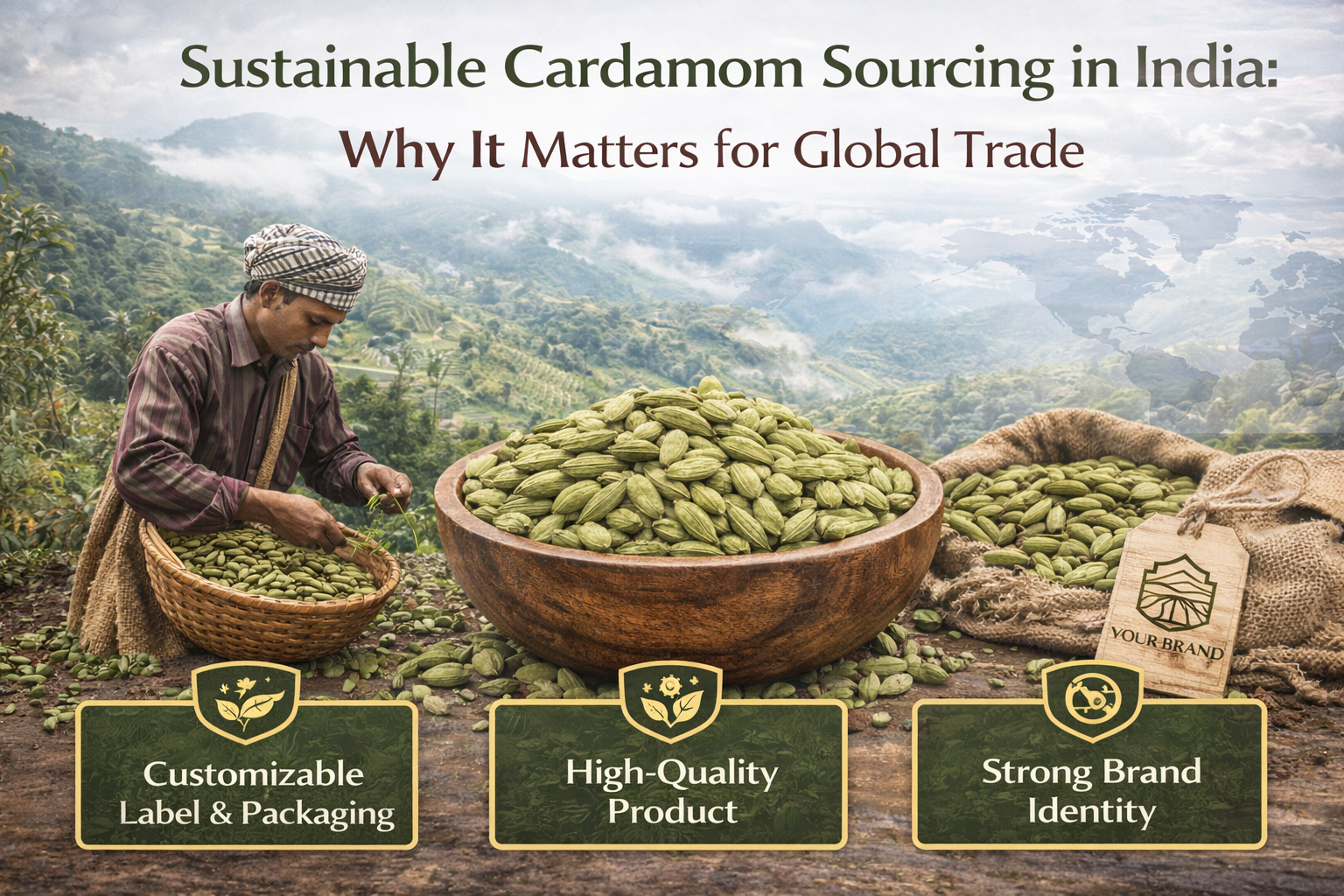
Sustainability is no longer a marketing term in international spice trade — it has become a core procurement criterion. Global buyers today assess not only quality parameters such as oil content and grading uniformity, but also sourcing transparency, environmental responsibility, and long-term agricultural stability.
In the cardamom sector, sustainability directly impacts supply continuity, regulatory compliance, and brand positioning. For importers operating in competitive retail and food manufacturing markets, sourcing ethically grown spices strengthens both operational resilience and consumer trust.
The Ecological Advantage of Indian Cardamom Cultivation
Cardamom grown in India’s hill regions — particularly in the Western Ghats — is traditionally cultivated under shade-grown agroforestry systems. Unlike monocrop industrial farming, cardamom plantations are integrated within forest ecosystems.
This cultivation model offers several environmental advantages:
- Natural shade from native tree species
- Improved soil moisture retention
- Reduced erosion on hill slopes
- Enhanced biodiversity
- Lower chemical dependency
Shade-grown agriculture supports long-term soil fertility, reducing the need for excessive synthetic inputs. For global buyers, this translates into product consistency and sustainable yield cycles.
Why Sustainable Sourcing Matters to Global Buyers
Sustainable sourcing is not only environmentally responsible — it is commercially strategic. Buyers benefit in several measurable ways:
1. Supply Stability
Healthy ecosystems produce more consistent harvest cycles. Soil degradation and climate stress significantly reduce yield reliability. Sustainable farming practices help maintain stable output, minimizing supply disruptions and price volatility.
For importers managing long-term contracts, stable supply ensures predictable procurement planning.
2. Market Positioning & Brand Reputation
Consumers across Europe, North America, and parts of Asia increasingly prefer responsibly sourced food products. Retailers and food brands emphasize:
- Ethical sourcing
- Environmental protection
- Clean-label ingredients
- Traceable supply chains
By sourcing sustainably cultivated cardamom, importers enhance brand credibility and align with evolving consumer expectations.
3. Regulatory Alignment in Premium Markets
European markets, in particular, demand greater transparency in agricultural sourcing. Importers may be required to demonstrate:
- Traceability systems
- Pesticide compliance
- Responsible agricultural practices
- Environmental responsibility
Failure to align with sustainability expectations can restrict market access. Working with structured exporters reduces compliance risk.
Responsible Farmer Partnerships
Professional exporters play a critical role in promoting sustainability. Rather than operating as intermediaries, responsible export companies build long-term partnerships with farmers.
These partnerships encourage:
- Good agricultural practices (GAP)
- Soil health management
- Responsible input usage
- Timely harvesting techniques
- Knowledge sharing on climate resilience
Transparent sourcing strengthens credibility and ensures product integrity.
At Western Roots Indian Spices, sourcing strategies prioritize long-term farmer relationships and responsible agricultural practices, supporting both environmental balance and consistent export quality.
Energy Efficiency in Processing & Curing
Sustainability extends beyond cultivation. Post-harvest curing significantly affects both product quality and environmental footprint.
Modern exporters increasingly adopt:
- Energy-efficient electric drying systems
- Controlled temperature curing
- Reduced smoke-based drying methods
- Optimized batch processing
These systems preserve volatile oil content while reducing environmental emissions compared to traditional uncontrolled methods.
Efficient curing also improves uniformity and shelf stability — benefiting buyers who require long-distance shipments.
Waste Management & Operational Responsibility
Responsible export companies implement waste reduction strategies such as:
- Recycling packaging materials
- Optimizing carton dimensions to reduce freight waste
- Managing organic residue responsibly
- Reducing water consumption during cleaning processes
Operational sustainability lowers environmental impact while enhancing cost efficiency.
Traceability as a Competitive Advantage
Traceability is central to sustainable trade. Modern export systems allow buyers to:
- Identify plantation origin
- Track batch numbers
- Verify harvest timelines
- Access laboratory testing data
Traceability enhances recall readiness and strengthens quality assurance frameworks. In case of regulatory inspection or retail audit, documented traceability protects brand integrity.
Digital recordkeeping and documentation integration improve transparency throughout the supply chain.
Climate Resilience & Long-Term Supply Security
Climate variability increasingly affects agricultural commodities. Sustainable practices improve resilience by:
- Maintaining soil organic matter
- Preserving biodiversity
- Supporting natural pest control
- Reducing excessive chemical dependency
Importers partnering with environmentally responsible suppliers protect long-term procurement continuity.
Sustainability as a Strategic Trade Decision
In global spice trade, sustainability is no longer optional — it is a competitive advantage. Buyers who prioritize responsible sourcing benefit from:
- Lower regulatory risk
- Improved brand positioning
- Stable long-term supply
- Enhanced consumer trust
- Reduced environmental exposure
As global markets evolve, sustainability will increasingly influence purchasing decisions, trade agreements, and retail partnerships.
Conclusion
Sustainable cardamom sourcing in India reflects a combination of ecological balance, responsible farming partnerships, energy-efficient processing, and transparent export systems.
For international importers, sustainability is not merely an ethical choice — it is a strategic investment in long-term supply chain resilience and market credibility.
By partnering with structured exporters such as Western Roots Indian Spices, global buyers can align premium product quality with responsible sourcing practices — strengthening both environmental stewardship and commercial performance.